
Wet type peanut peeling machine is an efficient peanut peeling equipment, which is widely used in food processing industry. Grasping the soaking degree of peanuts correctly is one of the keys to ensure the peeling effect. Improper soaking may lead to incomplete peeling or high breakage rate, thus affecting product quality and production efficiency. So, how to master the soaking degree of peanuts? Here are some practical suggestions.

1. Grasp the soaking time
The soaking time of peanuts is usually determined according to the variety, size and water temperature. Generally, soaking in room temperature water for 6-8 hours is sufficient. If using warm water (30-40℃), the soaking time can be shortened to 3-4 hours. It’s important to note that excessive soaking time may cause the peanuts to absorb too much water, affecting the peeling process and even causing spoilage.
2. Selection of soaking water quality
The water quality also has a certain influence on the soaking effect of peanuts. It is suggested to use clean, impurity-free tap water or purified water for soaking to avoid impurities adhering to the surface of peanuts and affecting the subsequent processing steps. At the same time, the amount of water should be enough to cover all peanuts to ensure that each peanut can absorb water evenly.
3. Methods for judging soaking status
To determine if peanuts have been soaked sufficiently, use the following methods:
Gently squeeze the peanut skins. If they peel off easily, the soaking is adequate.
Observe whether the peanut surface is evenly swollen and soft.
If some peanuts are still hard or difficult to peel, extend the soaking time appropriately.
4. Using the peeling machine
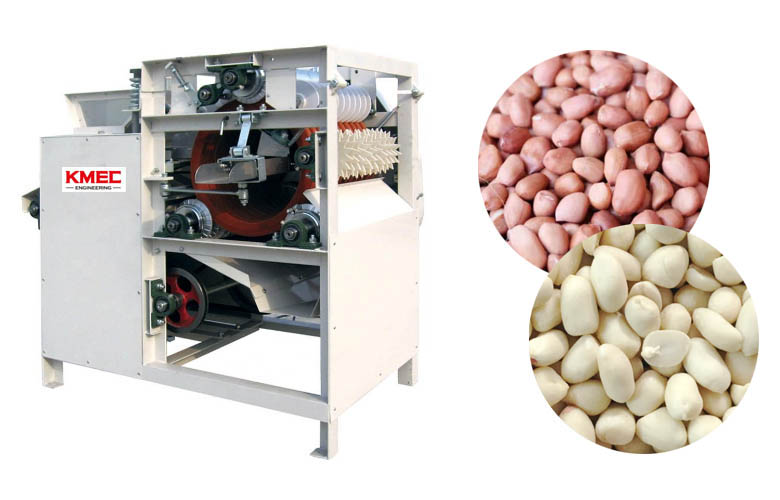
When using the wet type peanut peeling machine, keep the soaked peanuts as moist as possible. If the peanut surface is too dry, spray some water to improve peeling efficiency. Additionally, adjust the peeling machine parameters to suit different varieties and conditions of peanuts.
The soaking degree of peanuts is not fixed—it should be adjusted flexibly based on peanut variety, water temperature, and processing conditions. Through careful observation, small-batch testing, and parameter optimization, operators can achieve the best peeling performance.
Correct soaking and standardized operation not only enhance the efficiency of the peanut peeling machine, but also significantly improve product quality and economic returns for peanut processing enterprises.