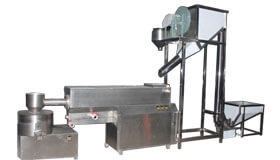
Model: KL-2;
Capacity: 200kg/h;
Size: 2900*2100*1650mm
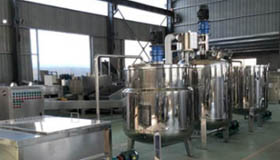
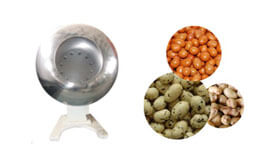
The KL-2 commercial peanut roasting machine is a dual-drum, batch-type roasting machine designed specifically for high-quality small to medium snack food manufacturers. Constructed from food-grade stainless steel, the machine offers excellent corrosion resistance and can be quickly cleaned when switching between different processing materials. The built-in automatic temperature controller precisely regulates the temperature throughout the roasting process, preventing localized burning while preserving the nuts' natural crispness and ensuring exceptional quality in the final product. It is suitable for processing peanuts (in-shell or kernels), chestnuts, walnuts, almonds, soybeans, sunflower seeds, and other granular food ingredients. Its dual-drum design allows operators to process two batches of material simultaneously or optimize workflows by staggering feed times, thereby ensuring smoother production operations.
Request for a quotation!
Contact us for a free quotation or request additional information.
The KL series commercial peanut roasting machine adopts an integrated structural design with 1 to 5 interchangeable drums. The outer shell is fabricated from stainless steel, delivering long-term durability under continuous production conditions.


Tyle |
Transmission Power |
Power |
Capacity |
Size |
| KL-05 peanut roaster | 0.75kw | 13.5kw/380v | 50kg/h | 2300*1000*1350mm |
| KL-1 peanut roaster | 1.1kw | 22.5kw/380v | 100kg/h | 2900*1400*1650mm |
| KL-2 peanut roaster | 2.2kw | 36-44kw/380v | 200kg/h | 2900*2100*1650mm |
| KL-3 peanut roaster | 3.3kw | 54-67kw/380v | 300-350kg/h | 4700*2900*1650mm |
| KL-5 peanut roaster | 5.5kw | 112.5kw/380v | 500-600kg/h | 4700*2900*1700mm |
The KL series offers two heating configurations to match your facility’s energy infrastructure:
Both configurations are managed through the same automatic temperature controller and timer system. Operators select the target temperature and roasting duration based on the specific nut variety, moisture content, and desired roast degree. The controller maintains setpoint stability throughout the cycle, removing the variability that manual adjustment introduces.
Pro Tip: For in-shell peanuts, start with a lower initial temperature and extend dwell time slightly. The shell acts as a thermal buffer, and aggressive early heat can drive moisture outward too quickly, causing shell cracking.
How to choose a KL Series commercial peanut roaster? Please contact our technical team and provide your target production capacity, product form (in-shell/kernel), and available heat source. We will recommend a suitable equipment configuration based on your production capacity requirements and site layout. Additionally, we can provide a trial roasting plan to help you verify the equipment’s performance before making a formal purchase.
Q: What is the difference between the KL Series and continuous belt roaster?
A: The KL Series consists of batch drum dryers. Each operating cycle includes loading, roasting, and unloading, meaning it processes one independent batch at a time. This type of equipment is suitable for production environments that require processing a variety of products, precise control over each batch, or where floor space is limited. Continuous belt roasters are better suited for single-product, high-volume runs exceeding 500 kg/h with minimal recipe changes.
Q: Can the KL-2 model roast both in-shell and shelled peanuts?
A: Yes. The tumbling action of the drum is suitable for both types of peanuts. For in-shell peanuts, the roasting time is typically slightly longer, and the initial temperature must be set lower so that heat can penetrate the shell while preventing the kernel surface from burning.
Q: Which heating method is more cost-effective?
A: Electric heating is simpler to install initially and allows for precise low-temperature control, which helps ensure food safety. Gas heating typically recovers to operating temperature faster during batch changes; in regions where natural gas prices are competitive, the energy cost per unit weight (per kilogram) is lower. The specific choice depends on your local energy prices and production schedule.
Q: How can I ensure consistent color across batches after roasting?
A: Before loading the product, preheat the drum to the target temperature. Maintain a consistent load weight for each batch—overloading will extend roasting time and result in uneven heating. We recommend using the timer function rather than relying solely on visual inspection; additionally, record the process parameters for each product. The repeatability of the control system largely depends on the operator’s consistency during loading and preheating.
Q: What maintenance does the commercial peanut roasting machine require?
A: Daily: After the final batch is finished roasting, empty the drum and clean the interior with a brush. Weekly: Check the chain tension and lubrication. Monthly: Calibrate the temperature controller using an external probe. The equipment’s stainless steel surfaces are easy to wipe clean and do not require specialized chemical cleaners.
If you're interested in our products or have any questions, please let us know. Don't hesitate to contact us!
Kate Road, Anqiu City, Shandong province, China.
Call us: +86-372-5388851
info@chinapeanutmachinery.com