
In short, the answer is yes. The hulling performance of a peanut peeling machine varies depending on the peanut variety being processed. This variation stems from biological and physical differences among peanut varieties, including variations in seed coat structure, kernel morphology, and moisture absorption. For food processors and snack food manufacturers, understanding these variables is critical to maximizing the efficiency of peanut processing machine and ensuring consistent product quality.
1. Seed Coat Thickness and Adhesion Strength
The thickness and adhesion of the peanut skin of different varieties are important factors affecting the peeling effect. Varieties such as Virginia peanuts typically have thicker seed coats that adhere less firmly, making them easy to hull using moderate mechanical friction. In contrast, varieties such as Spanish peanuts or Valencia peanuts may have thinner seed coats that adhere more firmly, requiring higher shear forces or extended residence time inside the peanut peeler. This difference may result in some peanut varieties having incomplete peeling or a higher rate of breakage.
Optimization tip: For high-adhesion varieties, pre-treatment with short-term infrared heating or mild conditioning can partially degrade pectic substances, reducing the force needed for skin removal and lowering the kernel breakage rate.
2. Kernel Size Distribution and Shape Uniformity
The size and shape of peanut kernels also affect the peeling effect. Most peanut peeling machines are typically designed with specific working gaps and parameters, suitable for a certain range of peanut sizes.
- When processing large-kernel varieties (e.g., Runner-type), oversized nuts may experience excessive compression, leading to higher split-kernel rates.
- Conversely, small-kernel varieties (e.g., Spanish) may not receive sufficient friction, resulting in incomplete skin removal (residual skin >5% by weight).
Therefore, when processing different varieties of peanuts, adjusting the equipment parameters to suit their kernel characteristics is particularly important.
3. Moisture Content and Its Thermodynamic Effects
The water content of peanuts is also a key factor affecting the peeling effect. Generally speaking, peanuts with moderate water content are easier to peel, while peanuts that are too dry or too wet may increase the difficulty of peeling. The ideal MC for mechanical peeling typically falls within 6–8% (wet basis).
- At MC > 10%, the testa becomes plastic and sticky, increasing the risk of clogging the peeling screen and reducing the machine’s throughput by up to 30%.
- At MC < 5%, the kernels turn brittle, and the skin fractures into fine particles that are difficult to separate via aspiration, while the cotyledons are prone to fissuring.
Therefore, before peeling, proper water content adjustment of peanuts can significantly improve the peeling effect.
In order to cope with the characteristics differences of different varieties of peanuts, modern peanut peelers are usually designed to be more flexible, and can adapt to the needs of different varieties by adjusting parameters such as pressure, rotating speed and working gap. In addition, some high-end equipment is equipped with automatic detection and adjustment function, which can optimize the processing process according to the actual situation of peanuts, thus improving efficiency and yield.
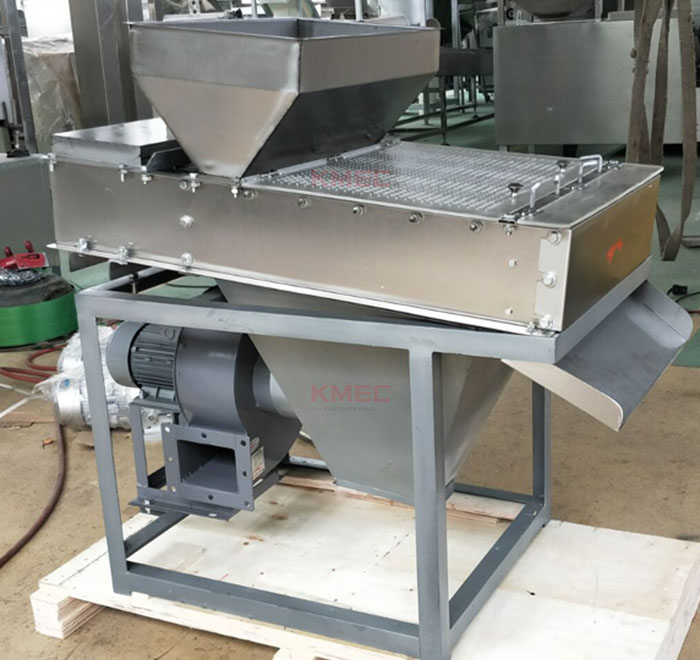
In summary, peanut varieties have a significant and measurable impact on the hulling performance of peanut peeling machines. Key differentiating factors include the adhesiveness of the peanut hulls, kernel size, moisture content, and surface friction characteristics. However, these varietal differences can be effectively managed through proper pretreatment, real-time moisture control, and adaptive machine settings. Investing in a peanut processing machine equipped with intelligent adjustment capabilities not only improves the consistency of the hulling process but also reduces waste, lowers energy consumption, and enhances overall profitability—regardless of the peanut variety entering the production line.