
Purchasing peanut sieving machine is a crucial decision for many processing plant owners. However, the market offers a wide variety of equipment at varying prices, and a slight misstep can lead to purchasing an unsuitable machine, resulting in low production efficiency or even economic losses. So, how do you choose a truly high-quality peanut sieving machine? Here are five practical tips to help you test the machine on-site and easily avoid pitfalls.
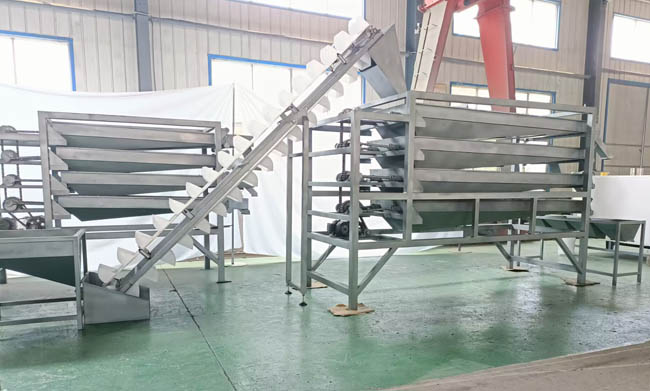
1. Bring your own materials, refuse sample demonstrations
Some manufacturers use carefully selected clean materials for demonstrations, making the machine’s performance appear ideal. However, in actual use, peanuts often contain impurities such as mud and straw. Therefore, when testing the peanut sieving machine, always bring your own dirtiest and wettest peanuts from your own warehouse.
- Qualified performance: The screened product is clean and free of impurities, with almost no good peanuts at the waste outlet.
- Problem performance: The finished product still contains mud or good peanuts ending up at the waste outlet, indicating poor machine screening performance.
2. Grab a handful of finished product and check the breakage rate
The primary task of the peanut sieving machine is grading, not crushing. After the machine has run for a few minutes, grab a handful of finished product and observe it.
- Acceptance standard: Peanut breakage rate less than 1%, peanut kernels intact without cracks.
- Warning signs: If the edges of the finished peanut kernels show obvious cracks or broken pieces, it may be due to excessive machine vibration or an unreasonable screen design.
3. Observe the material distribution at the three discharge ports
High-quality equipment should have clear and distinct material distribution:
- Finished product port: Peanuts are clean and uniform in size.
- Heavy impurity port: Stones, clods of earth, and other impurities, with no peanuts mixed in.
- Light impurity port: Leaves, empty shells, and other light impurities, without peanut kernels.
If “material mixing” occurs at the discharge ports, it indicates a problem with the air separation system and the gravity meter’s calibration.
4. Run continuously for half an hour to test stability
During the trial run, don’t just observe the first few minutes, but ask the machine to run continuously for at least 30 minutes to test its stability.
- Observation points: Is the screen clogged? Are there any abnormal sounds? Is the motor overheating? If the machine malfunctions after prolonged operation, it indicates an unreliable design.
5. Check materials and details
Finally, carefully touch the key parts of the machine:
- Material contact parts: Must use 304 stainless steel to ensure food safety and durability.
- Welding points: Are they smoothly ground? Are there any burrs? Rough welding can easily lead to material adhesion and mold growth.
Buying peanut sieving machine is about improving production efficiency, not buying a hassle. Instead of solely pursuing the lowest price, it is better to choose a manufacturer that provides trial operation. We specialize in the research and development and production of peanut machinery, supporting on-site testing with your own materials; no sale if you’re not satisfied. Whether it’s a single machine or a complete production line, we can tailor a solution to your specific needs. Choose reliable equipment and make your processing plant profitable!