
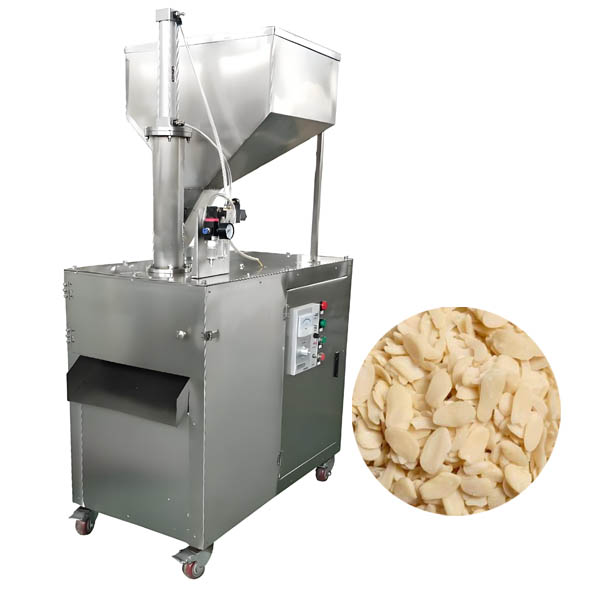
The nut slicing machine is an indispensable piece of food processing equipment, widely utilized in the production of peanut-based confections, almond flakes for bakery toppings, and other nut-derived ingredients. The thickness of the slices not only directly determines the texture of the final product but also affects the efficiency of subsequent processing—whether baking, frying, or coating. Therefore, mastering the correct adjustment methods for peanut slicers is crucial for maintaining product consistency and maximizing output. The following are some methods and precautions about how to adjust the thickness of peanut slices:
1. Check the equipment manual
Before adjusting the thickness, it is recommended to read the instruction manual of the equipment carefully. Different types of nut slicers may have different adjustment methods, and understanding the specific structure and operation method of the equipment is the first step to adjust the thickness correctly.
2. Calibrate the Blade Gap with Precision Tools
The core of thickness adjustment lies in modifying the blade clearance. For a nut slicing machine, this typically involves loosening locking nuts and turning adjusting bolts—often with a pitch of 0.1 mm per rotation. To achieve a standard slice of 1.5–2.0 mm (ideal for dry roasting), use a feeler gauge to measure the gap at multiple points along the blade length. Ensure the clearance is perfectly parallel to the cutting platform; an uneven gap will produce tapered slices, compromising cooking consistency. For thicker slices (e.g., 3–4 mm for oil-roasted snacks), incrementally increase the gap. Always rotate the adjustment knob clockwise to decrease thickness and counterclockwise to increase it, unless specified otherwise in the manual.
3. Conduct a Trial Run with Sample Batches
After initial calibration, perform a trial cut using a small amount (approximately 500 grams) of raw peanuts. Evaluate the quality of the slices, including:
- Uniformity: Inspect 20 randomly selected slices using a digital caliper. The uniformity tolerance for commercial-grade slices should be within ±0.2 millimeters.
- Integrity: Ensure that the slices are not broken or damaged, as this indicates excessive blade pressure or a dull blade.
- Particle Size Distribution: Use a sieve analyzer to assess the fine powder content; slices that are too thin increase powder waste and reduce overall profitability.
If there are deviations in thickness, adjust the gap in increments of one-quarter turn and retest until the desired specifications are met. Record the final screw position for future reference.
4. Pay attention to safe operation
When adjusting the nut slicer, make sure that the equipment is in a power-off state to avoid accidental injury. In addition, protective gloves should be worn during operation to prevent hand injuries.
5. Regular maintenance and cleaning
The accuracy of the equipment directly affects the slice thickness, so it is necessary to maintain and clean the blade regularly. If the blade is seriously worn or foreign objects are stuck, it may lead to uneven slice thickness, so the blade should be replaced or cleaned in time.
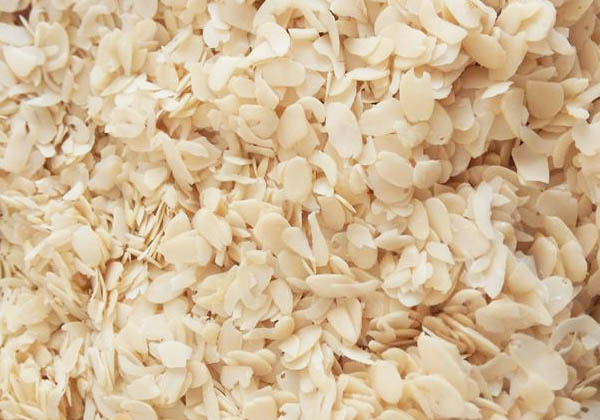
In a word, it takes care and patience to adjust the thickness of nut slices produced by peanut slicer, and at the same time, it is necessary to strictly follow the equipment operation rules. Through reasonable adjustment, the thickness of processed peanut slices can be ensured to be uniform, thus improving the product quality.