
Peanut peeling (or skin removal) is a crucial value-added step in the peanut processing. Whether you’re producing roasted peanuts, peanut butter, peanut candy, or peanut protein powder, peeling directly affects the final product’s quality, shelf life, and sensory appeal. Although peanut skins are nutrient-rich, the red seed coat can impart a bitter taste and affect the color uniformity of the finished product.
Based on their peeling mechanisms, peanut peeling machines are primarily divided into two categories: dry peanut peelers and wet peanut peelers. Understanding their technical differences, operating parameters, and suitability for specific raw materials is crucial for optimizing your production line and reducing total cost of ownership (TCO).
1. Dry Peanut Peeling Machine
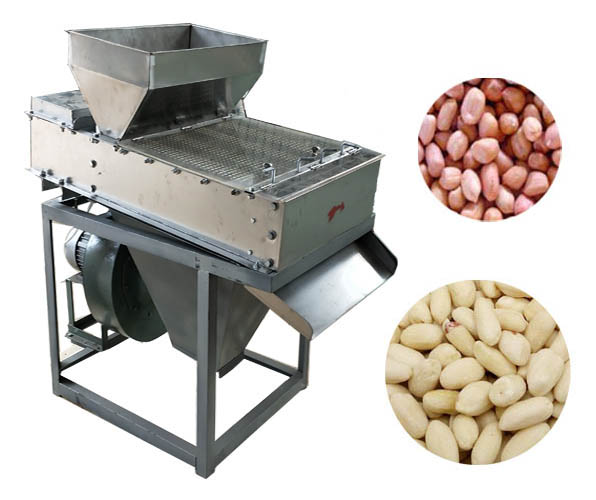
Dry peanut peelers operate without any water or thermal pretreatment. They rely on mechanical forces—principally friction, compression, and mild impact—to crack and separate the dry skin from the kernel.
Working Principle:
These machines typically use corrugated rubber rollers or abrasive surfaces that rotate at varying speeds. As the peanuts pass through the gap between the rollers, they are subjected to shearing and friction forces, which strip away the brittle, low-moisture skins. An integrated air suction system then draws the lighter peanut skins away from the heavier kernels, ensuring complete separation of the skins from the kernels.
Raw Material Requirements:
The effectiveness of dry peeling depends largely on the moisture content and roasting history of the raw material. Optimal results are achieved with roasted peanuts that have a moisture content below 5–6% and have been roasted evenly (core temperature of 160–180°C for 20–30 minutes). Under-roasted or unroasted peanuts result in poor skin performance and high breakage rates.
- Main Applications: Peanut flour, defatted peanut flour, chocolate-coated peanuts, and peanut butter production lines.
- Advantages: Simple operation, easy to clean, and preserves the peanut’s natural oils.
- Limitations: Requires precise control of roasting temperature; compared to the wet method, the peanut kernel breakage rate is slightly higher.
2. Wet Peanut Peeling Machine
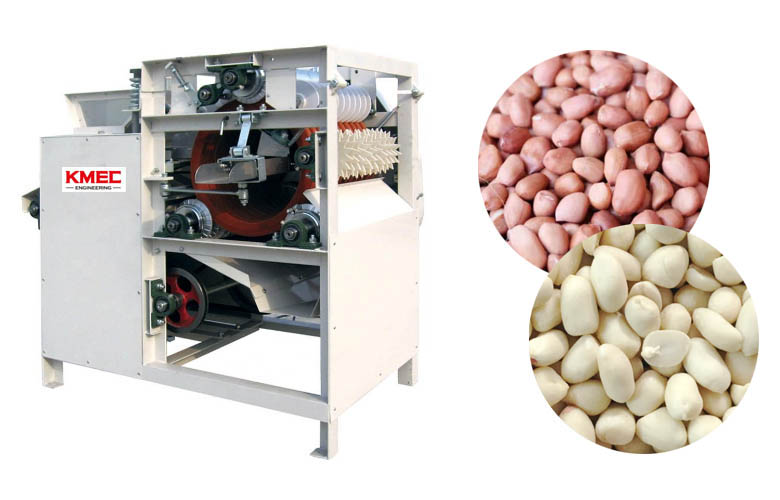
The wet peanut peeler, also known as a blanching or soaking peeler machine, removes peanut skins through a combination of water immersion and mechanical friction. The process leverages hydration to swell the skin and weaken its adhesion to the cotyledon.
Working Principle:
Peanuts are first soaked in room-temperature or warm water (40–60°C) for 10–30 minutes to soften the peelers. The hydrated nuts then pass through a peeling chamber equipped with rotating rubber discs, gentle brush rollers, or silicone-coated paddles that rub off the loosened skin without crushing the kernel. A continuous water flow washes away the shed hulls, and a vibrating screen or hydrocyclone separates the clean kernels.
Raw Material Adaptability:
Wet peeling is suitable for raw and roasted peanuts, as well as peanuts with varying moisture contents (6% to 12%). It is particularly effective for high-oil peanut varieties (such as Runner types), as dry peeling may result in excessive oil buildup on the drums.
- Main Applications: Peanut butter production, canned peanuts, peanut milk, beverage bases, and dairy alternatives; as well as premium confectionery products requiring high visual perfection.
- Advantages: Superior peeling completeness and kernel integrity; simultaneous washing (removal of dirt and fine particles prone to aflatoxin contamination).
- Limitations: Higher water and wastewater treatment costs; larger footprint; higher capital expenditure; slightly increased risk of microbial growth if hygiene management is inadequate (a pH of ≤ 4.5 or the use of chlorine-based disinfectants is recommended).
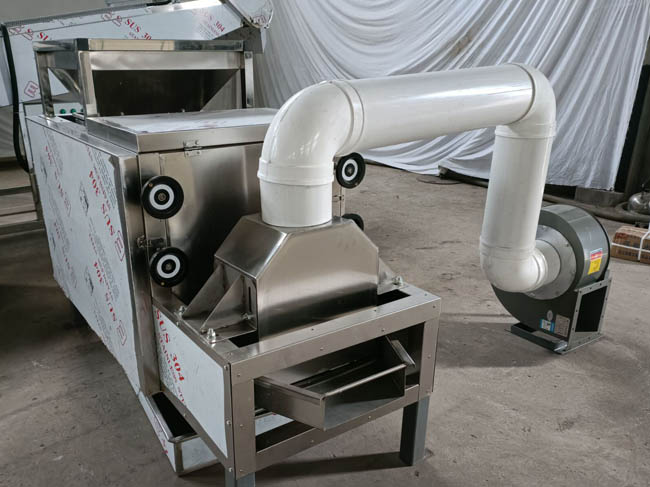
How to Select the Right Peanut Peeling Equipment
Choosing between a dry and wet peanut peeler is not a one-size-fits-all decision. Consider the following decision matrix based on your specific production profile:
| Decision Factor | Dry Peanut Peeler | Wet Peanut Peeler |
|---|---|---|
| Raw material type | Roasted peanuts only | Raw or roasted peanuts |
| Final product moisture | Low (<3%) – ideal for grinding | Higher (requires drying) |
| Peeling rate target | ≥95% | ≥98% |
| Broken kernel tolerance | Higher (3–5%) | Lower (1–2%) |
| Energy consumption | Lower (no water heating/drying) | Higher (water + drying) |
| Water availability & waste treatment | Not required | Essential |
| Production scale | Small to medium (≤1 t/h) | Medium to large (≥1 t/h) |
| Labor requirement | Lower (semi-automatic) | Moderate (more cleaning cycles) |
| Maintenance frequency | Roller replacement every 800–1,500 hours | Bearing and seal checks due to moisture |
| Total investment cost | $3,000–$25,000 (SME range) | $15,000–$80,000+ (with drying system) |
Conclusion
When selecting dry type or wet type peanut peeler, it should be decided according to the specific production demand and product use. If it is necessary to keep peanuts dry and have high requirements on processing speed, dry type peanut peeling machine may be a better choice; However, if the quality of the product is higher and you don’t mind extra moisture treatment, the wet type peanut peeling machine is more suitable.
Both dry type and wet type peanut peeling machines have played an important role in modern food processing industry, providing a reliable guarantee for improving production efficiency and product quality.