
In the modern food manufacturing industry, peanut butter production lines have greatly improved output and product quality consistency, but they are also one of the most energy-intensive processes in the nut processing industry. With rising electricity prices and increasingly stringent environmental regulations, reducing the total energy consumption of peanut butter processing machinery is no longer an option—it is a prerequisite for maintaining competitiveness. In addition to saving costs, optimizing energy use directly supports the development of green agriculture and enhances a brand’s ESG (Environmental, Social, and Governance) profile. Below are some data-driven, technically sound methods that can help you significantly reduce energy consumption (in kilowatt-hours) per metric ton of finished product.
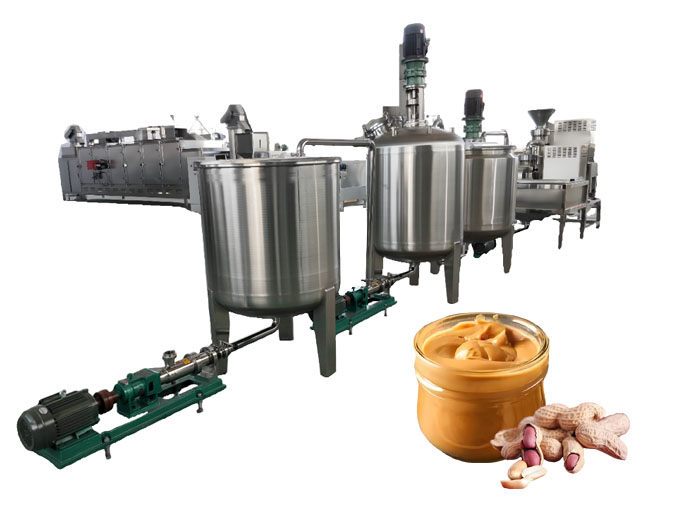
1. Choose efficient and energy-saving equipment.
Choosing mechanical equipment with high energy efficiency is the first step to reduce energy consumption. Modern peanut butter processing machinery pays more attention to energy-saving performance in design, such as equipment with variable frequency motor or energy recovery technology. Replacing standard induction motors with IE4 or IE5 premium-efficiency motors is the single most impactful upgrade. However, the real gain comes from pairing them with variable frequency drives (VFDs). In a typical peanut butter production line, the milling and grinding stages account for 45–55% of total electricity use. VFDs allow real-time torque adjustment based on feed rate—reducing energy draw during low-load periods by up to 30%. Additionally, specify motors with copper rotor technology, which lowers I²R losses by 15–20% compared to aluminum rotors.
2. Optimize the production process.
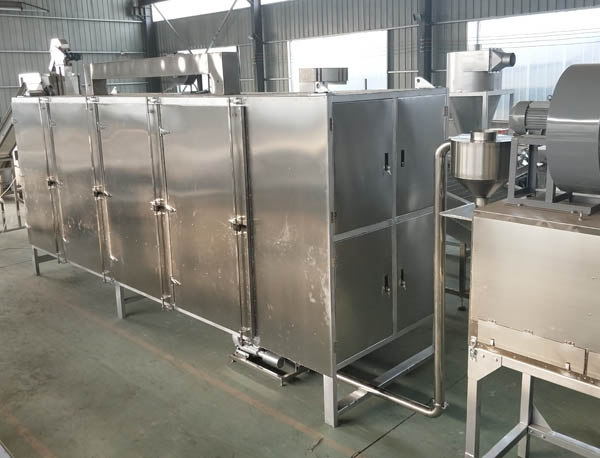
Reasonably planning the layout and technological process of peanut butter production line and reducing unnecessary material transmission and equipment idling can significantly reduce energy consumption. For example, in peanut shelling and sorting, repeated treatment should be reduced as much as possible, and the connection efficiency between equipment should be optimized. The roasting unit—often a continuous hot-air roaster—consumes substantial thermal energy, with exhaust gases leaving at 120–180°C. Install a shell-and-tube heat exchanger or run-around coil system to capture this waste heat and preheat incoming ambient air for the dryer or for maintaining oil-temperature stability in the colloid mill section.
3. Optimize the Grinding and Refining Stage via Cascade Milling
In traditional two-stage grinding (pre-grinder + fine grinder), both machines typically operate at fixed speeds. However, a cascade control strategy is preferable: the pre-grinder operates at variable speeds to produce coarse powder (particle size approximately 300 µm), while the secondary colloid mill operates only at peak efficiency (80–90% load) to achieve the final fineness (<40 µm). This prevents over-grinding and reduces specific energy consumption (SEC) by 8–12 kWh/metric ton.
4. Strengthen equipment maintenance.
It is an important means to reduce energy consumption to maintain the equipment regularly to ensure that it is in the best running state. Equipment aging or parts wear will lead to increased energy consumption, so it is particularly important to replace old parts in time.
5. Introduce automation and intelligent technology.
By introducing automation and intelligent control system, the running state of the peanut butter production line can be monitored in real time, and the running parameters of the equipment can be adjusted according to the actual demand, thus avoiding energy waste. Deploy an Industrial Internet of Things (IIoT) platform that monitors motor current, vibration, temperature, and throughput in real time. The system uses regression algorithms to predict the optimal setpoints for each stage—roasting temperature, grinding gap, and cooling water flow—based on incoming peanut moisture content and ambient humidity. Early adopters report 6–9% additional savings beyond traditional PID control.
6. Use renewable energy.
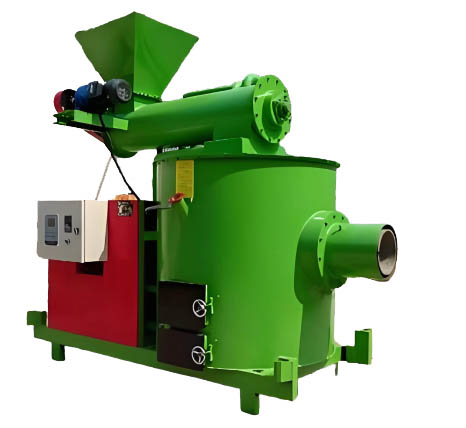
Given the high cost of electricity from the grid, consider implementing a solar photovoltaic (PV) system combined with battery storage, with sufficient capacity to meet daytime peak electricity demand—particularly for the roasting and milling processes. If peanut shells are available on-site, they can be used in conjunction with a biomass gasifier; the syngas produced from peanut shells can replace 30% to 50% of the natural gas used in roasting machines. In regions with abundant wind resources, small-scale distributed wind turbines (10 to 50 kilowatts) can be used to supply auxiliary power. It is essential to conduct a life-cycle cost analysis (LCCA) to compare the levelized cost of energy (LCOE) with grid electricity rates, while also taking into account available green energy subsidies.
7. Improve employees’ awareness of energy conservation.
It is also very important to cultivate employees’ awareness of energy conservation. Through training and publicity, operators can understand the importance of energy saving, and develop good energy-saving habits in daily operations, such as closing idle equipment in time and reasonably regulating equipment parameters.
8. Redesign the process flow to minimize redundant material handling
Each additional pneumatic elevator or screw conveyor increases energy consumption by 2–4 kWh/t. Use a Value Stream Map (VSM) to map out the layout of the existing peanut butter production line and identify redundant material handling steps. For example, position the cooling section directly above the filling station so that the peanut butter flows by gravity, thereby eliminating the need for a transfer pump. Similarly, integrate the grading and metal detection functions into a single vibrating conveyor, and incorporate magnetic separator and X-ray inspection capabilities to reduce floor space and the number of motors.
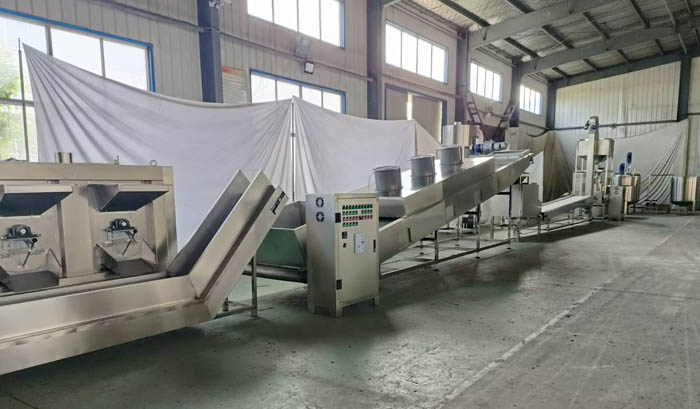
Through the above measures, the overall energy consumption of peanut butter production line can be effectively reduced, thus achieving a win-win situation of economic benefits and environmental benefits. In the future, with the development of science and technology and the popularization of the concept of green agriculture, I believe we can further promote agricultural machinery to move in the direction of high efficiency and environmental protection.