
In the modern food processing industry, the peanut coating machine serves as essential equipment and is widely used in the processing of nuts, beans, and confectionery products. Although the peanut coating machine is primarily designed for peanut coating processing, actual production often involves other materials such as almonds, cashews, walnuts, chickpeas, soybeans, and various sweets. Processing these different materials requires special attention to ensure product quality and the normal operation of the peanut coating equipment. The following are some matters needing attention when using peanut coating machine to process different materials.
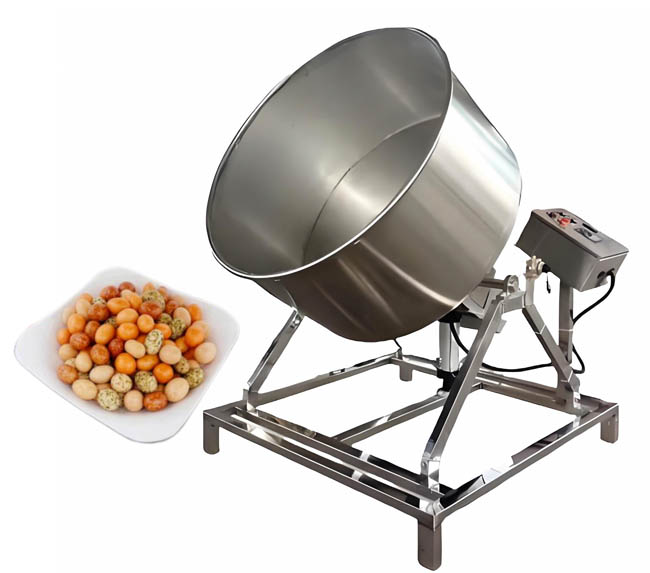
Firstly, the characteristics of different materials are quite different, so the parameters of equipment need to be adjusted according to the characteristics of materials before processing. For example, some materials may need higher temperature or longer processing time to ensure uniform adhesion of the coating. However, for some fragile or easily deformed materials, it is necessary to reduce the rotation speed or the feeding amount to prevent damage. Operators should also consider factors such as particle size, moisture content, surface roughness, and hardness when configuring the nut coating machine, as these variables directly affect coating uniformity and yield. Calibrating the peanut coating pan angle, spray rate, and drying temperature in advance helps minimize waste and improves coating consistency.
Secondly, cleaning and maintenance are important links to ensure the normal operation of equipment. When processing different materials, residue from previous batches may affect the quality of subsequent products, so the equipment—especially the roller, coating pan, and nozzle—should be cleaned promptly after each processing run to prevent cross-contamination and allergen carryover. Regular inspection of all parts of the food coating machine ensures they remain in good working condition, effectively extending the service life of the equipment. Lubricating moving parts, checking spray nozzles for clogging, and verifying temperature sensors are recommended as part of a routine maintenance schedule for any automatic peanut coating machine.
Besides, the selection of suitable coating materials is also an important factor for successful processing. Different materials may require different types of coating materials, such as syrup, chocolate, honey, powder coatings, or other specialty coatings. Selecting appropriate coating materials not only improves the taste and appearance of products but also enhances production efficiency. For example, a sugar coating machine configuration works best with syrup-based coatings, while a chocolate coating machine setup is ideal for chocolate-covered nuts and confectionery. Matching the coating formulation to the peanut coating line capabilities ensures consistent film formation and reduces coating defects such as uneven coverage or clumping.
Finally, operators need to receive professional training to master the operation skills and safety specifications of peanut coating machine. In the production process, we should always pay attention to the running state of the equipment and adjust the parameters in time to meet the needs of different materials. At the same time, we should strictly follow the safety operation rules to prevent accidents.
In a word, when using peanut coating machine to process different materials, it is necessary to adjust equipment parameters according to material characteristics, do a good job of cleaning and maintenance, select suitable coating materials, and ensure that operators have corresponding skills and knowledge. Only in this way can we ensure the smooth progress of processing and the stability of product quality. Whether you operate a single peanut coating pan or a complete peanut coating line, attention to these details will maximize the performance and lifespan of your peanut coating equipment.