
1. Insufficient production capacity to meet market demand
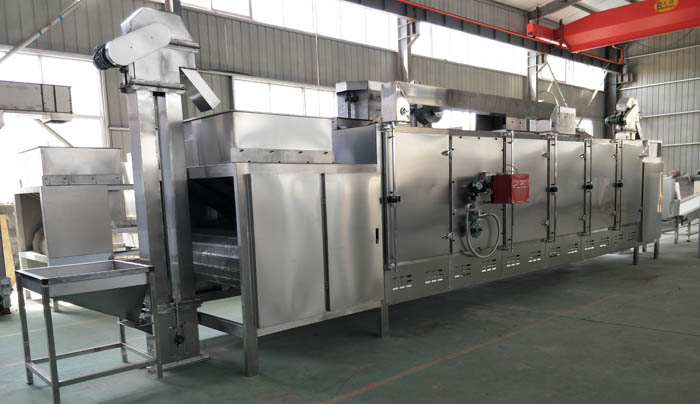
When your existing peanut butter production line approaches or exceeds its design capacity, you run the risk of order backlogs and lost sales. Upgrading to high-capacity equipment, such as continuous roasters or large-capacity peanut butter machines, can increase output by 40–60%. Modern production lines integrate automatic feeding systems and variable frequency drives (VFDs) to stabilize material flow and reduce downtime during batch changeovers. This directly meets demand during peak seasons and minimizes customer churn caused by delayed deliveries.
2. Difficulty in improving product quality
Premium peanut butter requires a particle size below 25 microns for smooth variants and precise oil separation control for natural products. Consumers have increasingly higher requirements for food quality, especially for ready-to-eat products like peanut butter. If the existing production line is insufficient in terms of product smoothness, consistency of taste, or hygiene standards, then upgrading equipment to improve product quality is necessary. For example, adopting more advanced grinding technology or automated cleaning systems can effectively improve product quality and safety.
3. The equipment is aging and the maintenance cost is increasing
After 8–10 years of continuous operation, critical parts—bearings, seals, gearboxes, and conveyor belts—exhibit fatigue cracks and alignment drift. Long-term operation of production line equipment may lead to aging problems, resulting in frequent failures and increased maintenance costs. This will not only affect production efficiency, but also delay delivery time due to equipment downtime. At this time, upgrading to more durable and reliable new equipment can reduce maintenance frequency and long-term operating costs.
4. The energy consumption is too high and the operating cost is too high
Old equipment usually consumes more energy, while modern equipment is more prominent in energy saving and environmental protection. If the enterprise finds that the production line consumes a lot of electricity and wastes a lot of energy, it can effectively reduce the energy consumption by upgrading the equipment, thus reducing the production cost and meeting the requirements of sustainable development.
5. Industry competition has intensified
With the intensification of market competition, enterprises need constant innovation to remain competitive. If competitors have adopted more advanced production technologies or introduced higher quality products, then enterprises also need to upgrade their production lines to improve their competitiveness and avoid being eliminated from the market.
6. Changes in policies and regulations
Regulatory bodies (the FDA, EFSA, and local authorities) periodically revise the maximum permissible levels for aflatoxins (≤15 ppb in the U.S., ≤8 ppb in the EU), acrylamide, and heavy metals. Outdated sorting and color-sorting equipment may lack the resolution needed to effectively detect contaminated grains. Modern optical sorters equipped with hyperspectral imaging and AI-driven rejection algorithms can achieve a contaminant removal rate of 99.7%. In addition, new wastewater discharge limits require the adoption of zero liquid discharge (ZLD) systems to treat wastewater—an upgrade that includes membrane bioreactors and evaporators. Noncompliance may result in fines of up to $50,000 per violation or plant shutdowns, making regulatory-driven upgrades imperative.
Strategic Decision Framework for Upgrading
Beyond individual triggers, perform a lifecycle cost analysis (LCCA) comparing:
- Capital expenditure (CAPEX) vs. operational expenditure (OPEX) savings over 5–7 years.
- Payback period—typically 18–30 months for energy and maintenance-focused upgrades.
- Scalability—choose lines with expandable control architectures (e.g., PLC-based with SCADA integration) to accommodate future capacity increments.
Also, evaluate supplier support for spare parts availability, training, and digital twin simulation to test new recipes offline. Collaborating with equipment manufacturers who offer modular skid-mounted designs reduces installation downtime from weeks to days.
Conclusion
The upgrading of peanut butter production line is not only to meet the market demand and industry changes, but also an important step for enterprises to achieve sustainable development. When deciding whether to upgrade, many factors such as capacity, quality, cost and competitive environment should be considered comprehensively to ensure that the upgraded production line can bring more efficient, better quality and more economical operation results.