
Peanut sheller machine is a common equipment in agricultural production, which is used to remove peanut shells of peanut fruits and obtain peanut kernels. In the process of use, many people will have a question: Is the higher the rotation speed of the peanut sheller, the faster the sheller will shell? This problem seems simple, but it actually involves the balance of mechanical principle and operation effect.
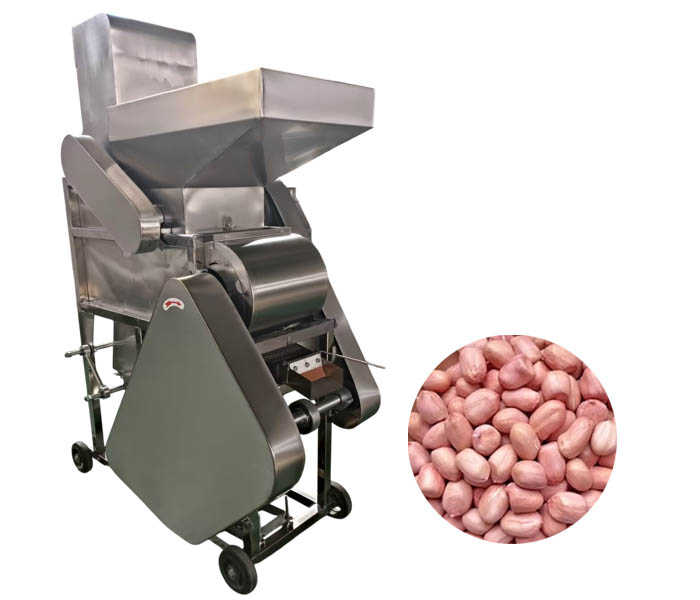
Rotation speed is indeed one of the important factors affecting the shelling speed. Theoretically, the higher the rotating speed, the higher the working efficiency of the sheller, because the speed of the drum or sheller is faster, and the shelling process can be completed more quickly. However, rotation speed is not the only decisive factor, and too high rotation speed may bring some negative effects.
The Hidden Costs of Over-Speeding Your Peanut Sheller
First, too high rotation speed may lead to an increase in the breakage rate of peanut kernels during shelling. Peanuts are subjected to greater impact at high speed and are easy to break into pieces, which will reduce the quality of peanuts and is not conducive to subsequent processing or sales.
Technical insight: For most air-screen peanut shellers, optimal impact velocity ranges between 12–18 m/s. Exceeding 22 m/s drastically elevates the breakage index, especially for varieties with thin testae (seed coats) like Virginia and Spanish types.
Second, excessive speed may also cause increased equipment wear. Long-term operation of mechanical parts under high load will shorten the service life of equipment and increase the maintenance cost.
Third, different varieties of peanuts have different requirements on the speed and intensity of shelling. Thin-shelled varieties (e.g., runner peanuts) require moderate speeds (350–450 RPM) to avoid over-cracking. Thick-shelled or high-moisture peanuts may benefit from slightly higher speeds but demand wider concave clearances. If the rotating speed is too high, it may not be able to adapt to some peanut varieties with thin skin and tender kernel, but it will reduce the overall efficiency.
How to Choose the Right Rotation Speed for Your Shelling Needs
Instead of chasing maximum RPM, adopt a systems approach to optimize your peanut sheller machine:
| Factor | Recommended Action |
|---|---|
| Peanut moisture content | Ideal range: 8–10% wet basis. Above 12%, reduce speed by 10–15% to prevent pod breakage without kernel damage. |
| Drum clearance | Maintain 8–12 mm gap for most varieties; tighten for small pods, widen for large. Adjust clearance before tweaking speed. |
| Feed rate | Uniform, moderate feeding prevents overloading and allows consistent impact force distribution. Avoid surge feeding at high RPM. |
| Manufacturer’s RPM spec | Typically 380–480 RPM for 3-phase motor-driven units. Always refer to the manual; exceeding by >15% voids warranties and increases risk. |
| Regular maintenance | Check belt tension, bearing lubrication, and screen condition weekly. A well-maintained peanut shelling unit performs better at lower speeds than a worn one at high speeds. |
Therefore, in practical use, it is necessary to choose the appropriate speed according to the specific situation. Generally speaking, the manufacturer of peanut sheller will provide the recommended rotation speed range in the manual, and users can adjust it according to the peanut variety, water content and equipment performance. In addition, reasonable operation methods and maintenance are also important factors to ensure the efficiency and quality of shelling.
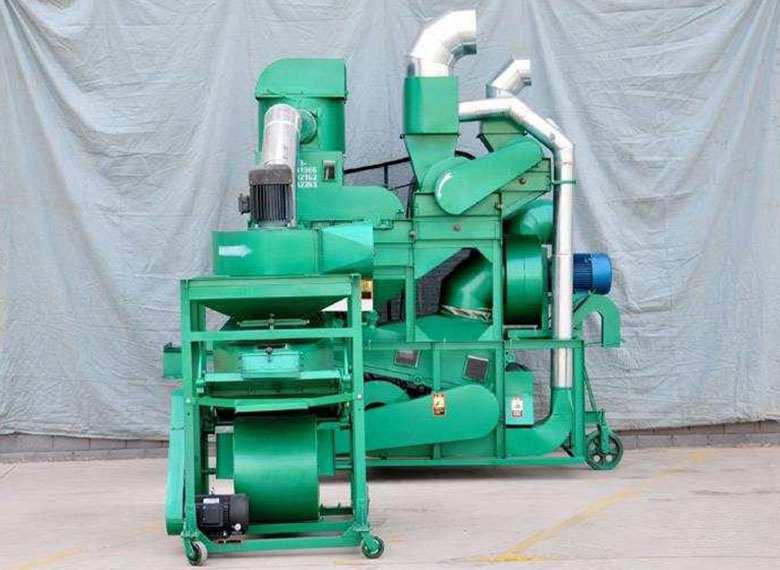
In a word, the rotation speed of peanut sheller is not as high as possible, but needs to find a balance between efficiency and quality. Scientific and rational use of equipment can not only improve production efficiency, but also prolong equipment life and bring greater benefits to agricultural production.