
Peanut sheller machine is a professional equipment for separating peanut shells from peanut kernels. While the rotor, fan, and transmission system receive considerable attention during operation and maintenance, the screen—often treated as a minor consumable—plays an equally decisive role in determining shelling quality and equipment longevity. When the screen aperture or configuration fails to match the physical characteristics of the incoming peanut pods, a cascade of technical and economic consequences follows. Understanding these consequences is essential for anyone operating a peanut machine in commercial or cooperative settings.
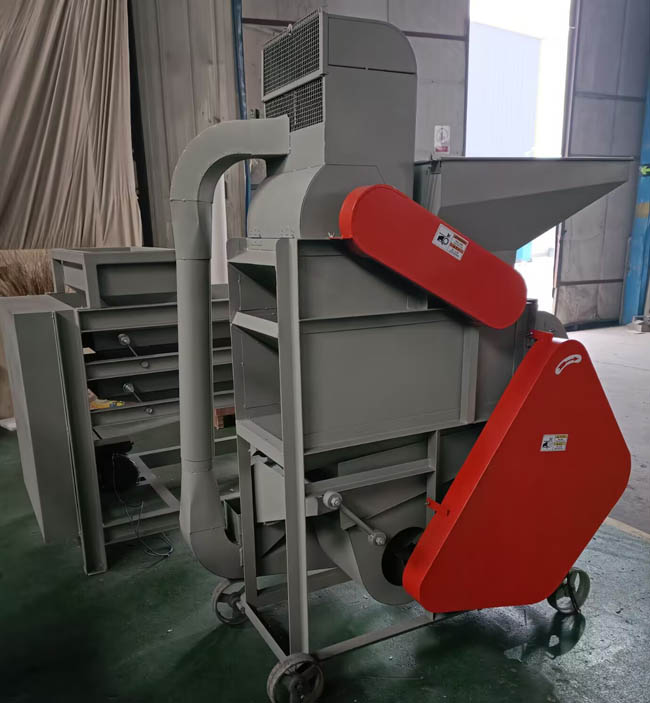
Possible consequences of improper screen:
1. Decreasing shelling efficiency.
If the screen aperture is too large or too small, it will directly affect the separation efficiency of peanut shells and peanut kernels. Excessive pore size may lead to the incomplete shelled peanuts directly passing through the screen, which will affect the product quality; However, if the aperture is too small, the peanut kernel may not pass through smoothly, which will increase the blocking probability and reduce the working efficiency.
2. The breakage rate of the peanut kernel increased.
Improper screen aperture may also lead to excessive extrusion or impact of peanut kernels during shelling, which will increase the breakage rate. This will not only affect the appearance of peanut kernels, but also reduce the market value, especially in the processing field that requires high integrity, such as making peanut butter or export trade.
3. Increased equipment wear and tear.
Improper screen will lead to an increase in mechanical operation load. For example, if the aperture is too small, it may lead to the accumulation of materials, and the machine will be under high load for a long time, which will accelerate the wear and even damage of parts. However, if the aperture is too large, unnecessary impurities may enter the machine, which will also cause damage to the equipment.
4. Increased energy consumption.
When a peanut machine operates with a mismatched screen, the time required to achieve acceptable shelling completion increases. Undersized screens demand extended residence time and repeated material circulation; oversized screens require additional cleaning and recirculation passes. Both scenarios translate into higher kilowatt-hour consumption per ton of processed peanuts. For smallholder cooperatives and commercial processors alike, this inefficiency directly inflates production costs and reduces the energy efficiency ratio of the operation.
5. Affect the subsequent process.
Inappropriate screen may lead to incomplete shelling or excessive impurity residues, which will cause troubles to subsequent cleaning and sorting processes, increase additional labor and time costs and reduce overall production efficiency.
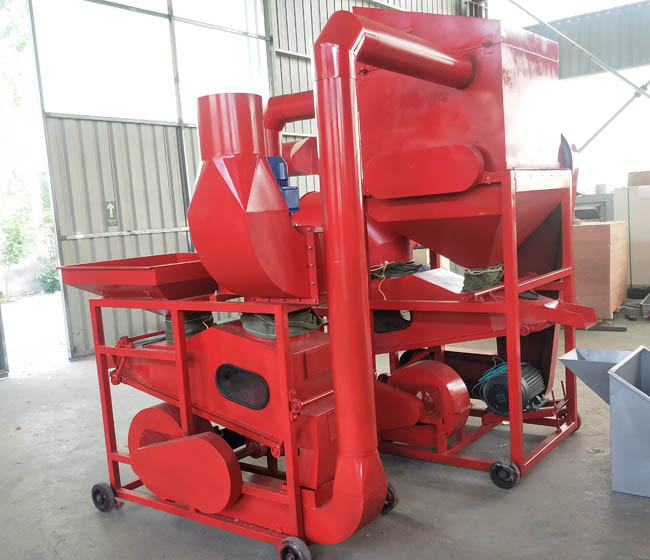
How to choose the right screen?
Avoiding these consequences begins with proper screen selection based on measurable peanut characteristics. The following parameters should guide the decision:
Match aperture to kernel dimensions, not pod dimensions. The screen aperture should permit fully shelled kernels to pass while retaining unshelled pods for continued shelling action.
Account for variety and seed size. Different peanut cultivars exhibit significant variation in kernel dimensions. A study of physical properties found average kernel length, width, and thickness of 20.29 mm, 10.24 mm, and 9.42 mm respectively, but individual varieties can deviate substantially from these means . For operations processing multiple varieties, maintaining a set of interchangeable screens in graduated sizes—such as 7, 8, 9, and 11 mm—allows rapid reconfiguration between batches .
Consider multi-stage shelling. In two-stage shelling configurations, the screen aperture for the second pass should be approximately 1.2 mm smaller than the first-stage screen, with a third stage (if used) 2 mm smaller than the second . This graduated approach accommodates the reduced pod size after initial shelling and improves overall recovery.
Monitor moisture content. Screen performance interacts with kernel moisture. Overly dry peanuts fracture more readily under impact, while overly moist peanuts resist shelling and tend to clog screen apertures. Operators should verify that moisture content falls within the recommended range for the specific peanut sheller machine model before adjusting screen specifications.
Inspect and replace regularly. Screens deform, corrode, and wear over time. A screen that was correctly sized at installation may develop enlarged apertures through abrasion or distortion that compromises separation accuracy. Routine inspection—at minimum before each harvest season—should include checking for hole elongation, frame distortion, and surface wear.
In short, although the screen is a small component of a peanut shelling machine, its importance cannot be ignored. Choosing the right screen can not only improve production efficiency but also extend the equipment’s lifespan, bringing greater economic benefits to agricultural production.
FAQ
Q: How do I know if my current peanut sheller machine screen is the wrong size?
A: Common indicators include visible unshelled pods in the kernel output (aperture too large), frequent screen blockage and reduced throughput (aperture too small), and elevated split-kernel percentages in the final product. A simple field test involves running a representative sample and inspecting the output stream for both whole pods and excessive breakage.
Q: Can I use one screen size for all peanut varieties?
A: Not recommended. Runner and Virginia market types have measurably different kernel dimensions, and USDA grading standards specify different screen configurations for each. Using a single compromise size typically results in suboptimal performance for at least one variety. Maintaining a set of interchangeable screens is the practical solution for multi-variety operations.
Q: How often should the screen be replaced?
A: Replacement intervals depend on throughput volume and abrasive content in the feedstock. As a general rule, inspect the screen for aperture elongation and frame distortion before each harvest season. Replace any screen showing visible wear patterns, hole enlargement exceeding 5% of nominal dimension, or structural deformation that prevents proper seating.
Q: Does screen size affect energy consumption measurably?
A: Yes. An undersized screen increases residence time and recirculation, directly raising kilowatt-hour consumption per ton processed. Correctly sized screens allow near-single-pass separation, keeping the motor closer to its efficient operating range.
Q: What is the relationship between screen size and sound splits in runner peanuts?
A: Research indicates that for runner market types, the percentage of sound splits increases linearly with seed size when standard runner screens are used. Larger seed sizes have a significantly higher probability of split kernels, suggesting that operations processing large runner seed may benefit from larger screen utilization consistent with USDA grading practices .
Q: Can a worn screen be repaired or must it be replaced?
A: Minor frame distortion may sometimes be corrected, but aperture enlargement from abrasion is irreversible. Attempting to weld or patch a worn screen surface typically creates uneven separation characteristics and is not recommended. Replacement with a correctly sized, manufacturer-specified screen is the reliable course.