
A peanut peeler machine is not universally mandatory for every peanut processing scenario, but it becomes indispensable when producing premium products such as smooth peanut butter, confectionery, and high-end peanut snacks. Within a modern peanut butter production line, the peeling stage directly governs final product texture, color consistency, and oxidative stability. For small workshops targeting low-cost, skin-on products, the investment may be deferred—but for any operation pursuing scale, quality standardization, or export compliance, the peeler is a strategic asset rather than an optional accessory.
What Does a Peanut Peeler Machine Actually Do?
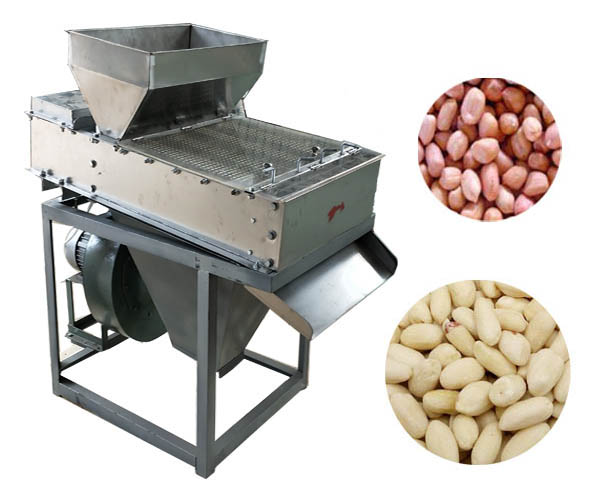
The primary function of a peanut peeler machine is to remove the red testa (skin) from peanut kernels after roasting or drying. This process is technically referred to as blanching in industrial peanut processing. The removal of the red skin serves multiple technical purposes beyond mere appearance:
- Bitterness Reduction: The red skin contains tannins and polyphenolic compounds that contribute astringency and bitterness. Removing it yields a cleaner, sweeter peanut flavor profile—critical for peanut butter and confectionery applications.
- Color Consistency: Red skin fragments can darken the final product and create visual specks in smooth peanut butter. Peeling ensures a uniform, creamy beige color that meets retail quality standards.
- Oxidative Stability: The skin is rich in lipids that are more susceptible to rancidity. Removing it reduces the risk of off-flavor development during storage, extending shelf life.
- Texture Engineering: Residual skin fragments disrupt the smooth mouthfeel of peanut butter. For products targeting a fine grind (typically below 7 µm in industrial colloidal milling), complete skin removal is a prerequisite .
Modern peeling equipment achieves peeling rates exceeding 98% with kernel integrity rates of 85–90%, depending on the model and peanut variety . Dry-type peelers, which use pneumatic principles and friction rollers, are the standard choice for roasted peanuts destined for butter production, as they avoid introducing moisture that would complicate downstream grinding and roasting .
When Is a Peeler Absolutely Necessary?
The necessity of a peanut peeler machine hinges on three factors: product specification, production scale, and quality certification requirements.
Peanut Butter Production: Peeling Is Non-Negotiable
In any commercial peanut butter production line, the peeling stage sits between roasting/cooling and the grinding section . The typical industrial sequence is:
Elevator → Roasting → Cooling → Peeling → Selection → Primary Grinding → Fine Grinding (Peanut butter machine) → Mixing → Degassing → Filling
Skipping or underperforming the peeling stage in this line creates cascading problems:
- Grinder Wear: Skin fragments increase friction and heat generation during milling, accelerating wear on colloid mill stators and rotors.
- Particle Size Distribution (PSD) Degradation: Residual skin particles create a “gritty” tail in the PSD curve, which is the primary cause of texture complaints in smooth peanut butter .
- Oil Separation Acceleration: Skin-associated phospholipids and fine solids can destabilize the natural oil suspension, promoting faster oil separation in natural peanut butter products.
For fortified or functional peanut butter products—those with added proteins, fibers, or minerals—the peeling stage is even more critical. Powder ingredients interact with residual skin particles, leading to clumping and inconsistent dispersion .
Confectionery and Snack Applications
Peanut candy, coated peanuts, and peanut-based confectionery require whole, skin-free kernels for proper adhesion of sugar or chocolate coatings. Peeling machines equipped with kernel-skin separation systems ensure that broken kernels and loose skins are diverted before the coating stage.
Export and Retail Compliance
Buyers in the EU, North America, and Japan increasingly specify blanched peanut specifications for allergen and quality documentation. Aflatoxin risk management programs also favor peeled kernels, as the skin can harbor mold spores that are difficult to detect visually .
When Can You Skip the Peeler?
There are legitimate scenarios where a peanut peeler machine may be deferred or avoided:
| Scenario | Rationale |
|---|---|
| Small-batch skin-on peanut snacks | Artisanal or regional products where red skin is a desired visual/textural feature |
| Very low-throughput workshops (<50 kg/h) | Manual or semi-manual peeling may be economically viable at micro-scale |
| Products where skin is intentionally retained | Certain traditional peanut pastes and boiled peanut products |
| Cost-sensitive operations with no quality certification | If the end market does not require blanched specifications |
However, even in these cases, the labor cost and inconsistency of manual peeling quickly erode any savings once production exceeds a few hundred kilograms per day. A dry-type peeler with 200–300 kg/h capacity represents a modest capital investment relative to the labor it replaces .
FAQ
Q: Can I make peanut butter without a peanut peeler machine?
A: Technically yes, but the resulting product will have darker color, detectable bitterness from tannins, and a gritty texture from skin fragments. Commercial peanut butter standards in most markets effectively require blanched peanuts.
Q: What peeling rate should I look for in a peanut peeler machine for a peanut butter production line?
A: A minimum of 98% peeling rate with kernel integrity above 85% is the industry baseline for butter-grade peanuts . Lower integrity rates increase grinding load and reduce yield.
Q: How does the peeler fit into the overall peanut butter production line layout?
A: The peeler is positioned immediately after the cooling conveyor and before the selection/sorting belt, which feeds the primary grinder . It must be integrated with a skin aspiration system and, ideally, a kernel return conveyor for oversize or unpeeled kernels.
Q: What is the difference between dry and wet peanut peeling for butter production?
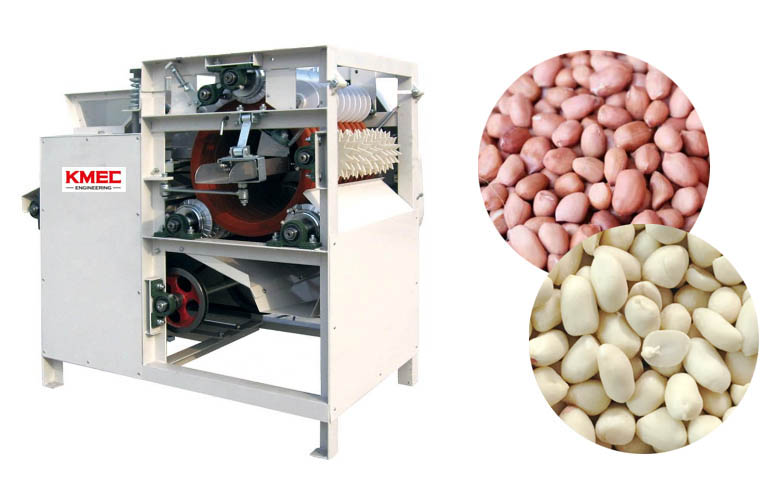
A: Dry peeling uses friction and air to remove skins from roasted kernels without moisture addition—this is the correct method for peanut butter. Wet peeling introduces water and is used for soaked peanuts in canned or boiled applications, not for roasting-based butter lines .
Q: What capacity peeler matches a 500 kg/h peanut butter production line?
A: The peeler should be rated at or slightly above the line’s kernel throughput. For a 500 kg/h finished butter line, a peeler with 500–600 kg/h raw kernel capacity provides adequate headroom for changeovers and minor downtime.