
Peanut sheller machine is a common mechanical equipment in agricultural production, but some parts are easily damaged during long-term use. If not maintained or replaced in time, these problems may affect the working efficiency of the machine and even shorten the service life of the equipment. Understanding the wear mechanisms and maintenance intervals of key components is essential for anyone operating a peanut machine in commercial or farm-scale processing. The following are the key components that are easily damaged in a peanut shelling machine, along with professional maintenance suggestions.
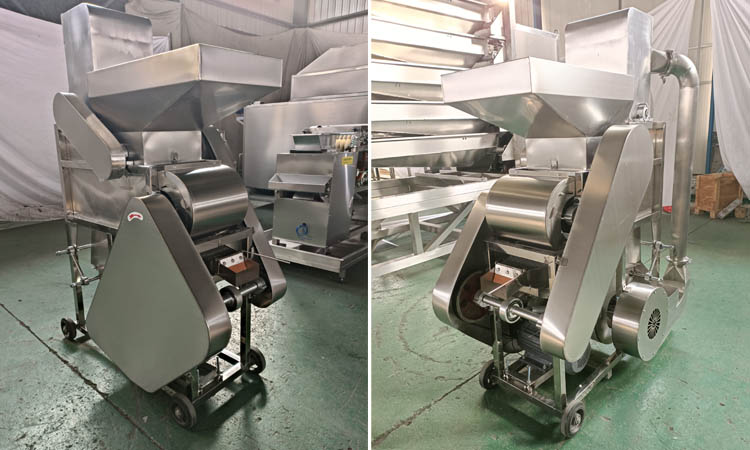
Screen
Screen is an important part of peanut shelling machine, which is used to separate peanut shells and kernels. In long-term use, the screen may be deformed or damaged due to friction or impact. It is recommended to regularly check whether there are cracks or holes in the screen, and replace in time when problems are found. At the same time, avoid putting in too hard or too large foreign objects when the machine is running, so as to reduce the loss of screen.
Shelling roller
Shelling roller is the core component of peanut shelling, and its surface wear will directly affect the shelling efficiency. In daily use, attention should be paid to adjusting the gap between the shelling roller and the screen, and cleaning the impurities attached to the surface regularly. If it is found that the roller surface is seriously worn, it should be replaced in time.
Bearing
Bearing is an important part to support the normal operation of the machine, but due to long-term high-speed operation, bearing is prone to wear or seizure. In order to prolong the service life of the bearing, lubricating oil should be added regularly, and whether there is abnormal sound or overheating should be checked. Once the problem is found, stop the machine immediately to repair or replace the bearing.
Motor
Motor is the power source of peanut sheller, and its performance directly affects the running state of the whole machine. In the process of use, the motor should be prevented from overloading and the heat dissipation of the motor should be kept good. If the motor has power drop or abnormal sound, it needs to be repaired or replaced in time.
V-belts
V-belts are used to transmit power, but they are prone to loosening, wear, or breakage over long-term use. The tension of the V-belts should be checked regularly; if loosening is found, it should be adjusted promptly; if severely worn, the V-belt should be replaced with a new one to ensure stable power transmission.
Fan blades
The fan blades are used to separate the peanut shells, but they may deform or be damaged during operation due to blockage by debris or impact. It is recommended to regularly clean the dust and debris from the fan blades and check for cracks or deformation, replacing them if necessary.
In summary, to extend the service life of the peanut shelling machine and improve work efficiency, operators should strengthen the daily inspection and maintenance of key components, addressing any problems promptly. A structured maintenance schedule, correct spare parts, and proper operator training are the foundation of reliable peanut machine performance. Only in this way can the machine operate stably and efficiently, providing reliable support for agricultural production.
FAQ:
Q1: What are the most common causes of peanut sheller breakdowns?
A: The most frequent causes are worn screens, loose or broken V-belts, bearing seizure due to insufficient lubrication, motor overload from over-feeding, and roller wear from abrasive shells. Most failures can be prevented with a regular maintenance schedule and correct feed rate control.
Q2: How do I know when to replace the screen of my peanut sheller?
A: Replace the screen when you find cracks, holes, enlarged or elongated mesh openings, or when kernel breakage and shell leakage increase noticeably. Screens are consumable parts—keeping a spare set on hand minimizes downtime during harvest.
Q3: Why does my peanut sheller motor overheat or trip the breaker?
A: Common causes include over-feeding beyond rated capacity, a loose or slipping V-belt, blocked motor cooling fins, low supply voltage, or a failing bearing that increases load. Check feed rate and belt tension first, then inspect the motor cooling system and bearings.
Q4: How do I adjust the shelling roller gap for different peanut sizes?
A: Set a smaller roller-to-screen clearance for small kernels and a larger clearance for large varieties. As a rule, start with a moderate gap, test-run a small batch, and check the shelling rate and kernel breakage rate—then fine-tune until breakage is minimal while shelling remains complete.
Q5: What spare parts should I keep in stock for my peanut sheller machine?
A: Keep a spare screen set, a matched set of V-belts, at least one set of bearings, lubricant, and fuses or overload protectors on hand. These are the highest-frequency wear and failure items and stocking them reduces harvest-season downtime.