
Nut slicers are indispensable equipment in the food processing industry. They are widely used to slice various nuts—such as peanuts, almonds, cashews, and walnuts—into uniform, thin slices for use in snacks, baking ingredients, cereal products, and confectionery. However, like all mechanical equipment, nut slicers are subject to wear and tear over time. Understanding their wear-prone components is key to maintaining consistent product quality, minimizing unplanned downtime, and reducing long-term operating costs.
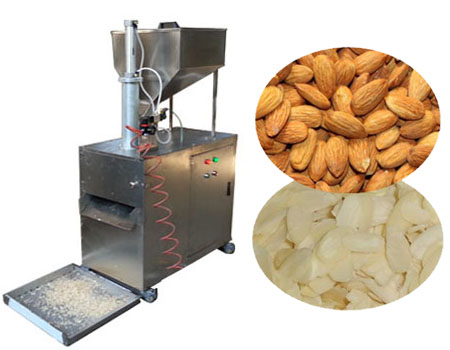
Below are the three most critical wear-prone parts of a nut slicing machine, along with detailed maintenance and replacement recommendations.
1. Slicing Blades—The Core Component of a Nut Cutter
The blades are the most critical component of any peanut slicing machine or almond slicing machine. The sharpness of the blades directly determines the uniformity of slice thickness, production speed, and product appearance. Continuous friction against hard nut kernels causes the blades to gradually dull, chip, or even crack.
Maintenance Tips:
- Check blade sharpness weekly. Dull blades increase energy consumption and result in irregular slices.
- If cracks, nicks, or severe wear are detected, replace the blades immediately.
- To ensure cutting precision, use only original or high-quality certified replacement blades.
- Establish a sharpening schedule based on operating hours (e.g., sharpen every 200–300 hours).
Pro Tip: Keep a set of spare blades on hand to avoid production downtime during peak seasons.
2. V-Belts – Power Transmission Essentials
The V-belt is a small yet critical component in the drive system of a nut slicing machine. It transmits rotational power from the motor to the blade shaft. Due to high-speed operation and constant tension, V-belts are prone to stretching, surface smoothing, cracking, or breaking.
Maintenance Tips:
- Check the tension of the V-belt monthly. A belt that is too loose can cause slippage and loss of speed; a belt that is too tight can damage the bearings.
- Check for signs of wear, such as fraying edges, cracks, or a shiny surface.
- If the machine uses a dual-belt system, replace the V-belts in pairs to maintain balance.
- Store spare belts in a cool, dry place away from direct sunlight to prevent premature aging.
3. Bearings – Ensuring Smooth Rotation
The bearings in a nut slicer support the rotating shaft and reduce friction between moving parts. They withstand significant radial loads and high rotational speeds. Over time, dust, nut particles, and insufficient lubrication can cause bearing wear, abnormal noise, overheating, or seizure.
Maintenance Tips:
- Clean the bearing housings weekly to remove nut residue and debris.
- Lubricate the bearings with food-grade grease according to the manufacturer’s recommended maintenance schedule.
- Listen for grinding or sharp squeaking noises during operation—these are early signs of failure.
- Replace damaged bearings immediately to prevent shaft misalignment or further damage to the blade assembly.
Pro Tip: In dusty cutting environments, using sealed bearings can reduce the risk of contamination.
Other Wear Parts to Monitor
- Feed Rollers: Uneven wear can cause unstable nut feeding and jams.
- Seals and Gaskets: Worn seals allow nut dust to enter the bearings, accelerating bearing failure.
- Motor Carbon Brushes (for small machines): Replace every 500–600 hours of operation.
Conclusion
Blades, V-belts, and bearings are the primary wear parts in any nut slicer, peanut slicer, or almond slicer. Regular inspection, timely replacement, and proper lubrication are essential practices in food processing facilities. By paying close attention to these high-wear components, operators can ensure continuous production, consistent slicing quality, and long-term reduction in maintenance costs.