
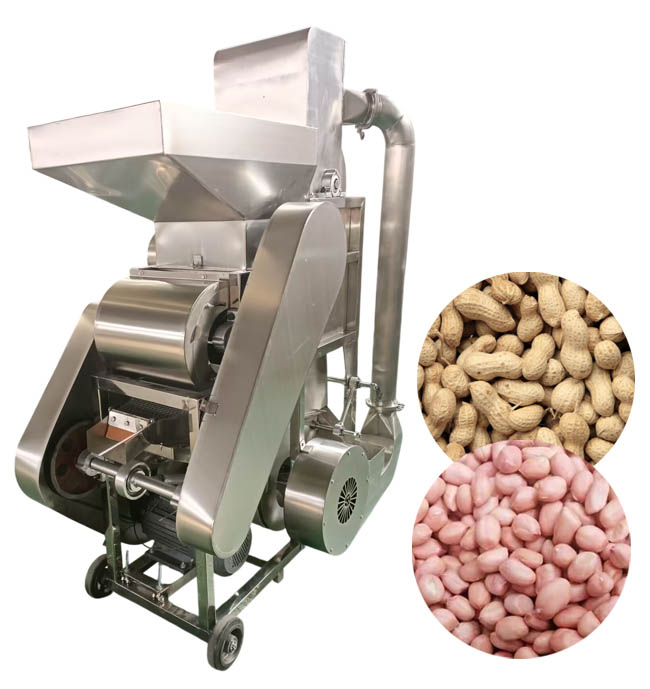
Peanut sheller machine is a common mechanical equipment in agricultural production. Its main function is to separate peanut fruits from peanut shells. However, in the process of use, various faults may occur, which will affect the normal operation. In order to judge and solve these problems quickly and effectively, we can adopt the “four senses method”, that is, “seeing, listening, touching and smelling”, and judge the equipment failure through intuitive senses.
First, seeing
Observing the running state of equipment through vision is the first step to judge the fault. Check the appearance of the machine for obvious damage, such as loose bolts, broken belts, worn parts, etc. In addition, it is necessary to pay attention to whether the sheller is shaking or inclined abnormally when it is running, and whether the peanuts at the discharge port are damaged or not shelled too much.
Second, listening
Listening to abnormal sounds while the machine is running is also an effective method. Under normal circumstances, the peanut shelling machine should operate with a uniform and stable sound. If abnormal noises are heard, such as metallic friction, impact sounds, or unusual motor noises, it may indicate problems such as damaged bearings, loose parts, or foreign objects inside the machine.
Third, touching
By touching the surface of the device, the temperature and vibration can be sensed. For example, if you touch the motor or bearing with your hand and feel overheated, it may be caused by insufficient lubrication or component wear. If you notice abnormal vibration, it may be due to rotor imbalance or loose bolts, requiring immediate attention.
Fourth, smelling
The change of smell can also reflect the running status of the equipment. If you smell burnt smell, it may be caused by motor overload or belt slipping. If there are other odors, check whether there are problems such as short circuit or deterioration of lubricating oil.
By using the “four senses method,” potential malfunctions in peanut shelling machine can be quickly identified, and corresponding measures can be taken for repair and maintenance. In daily use, the equipment should also be cleaned and inspected regularly to ensure it is in good condition, thereby improving work efficiency and extending equipment lifespan.