
In the operation of peanut coating machine, avoiding material adhesion is an important link to ensure coating quality and production efficiency. The following are some effective measures and suggestions, which can help operators reduce or avoid the problem of material adhesion.
Firstly, the spraying amount and concentration of coating solution should be controlled reasonably. Too much coating solution or too high concentration will easily lead to too wet peanut surface, thus increasing the possibility of adhesion. Therefore, during the operation, the spraying amount and concentration should be accurately adjusted according to the types, sizes and coating process requirements of peanuts, so as to ensure that the coating solution is evenly covered without excessive coating.
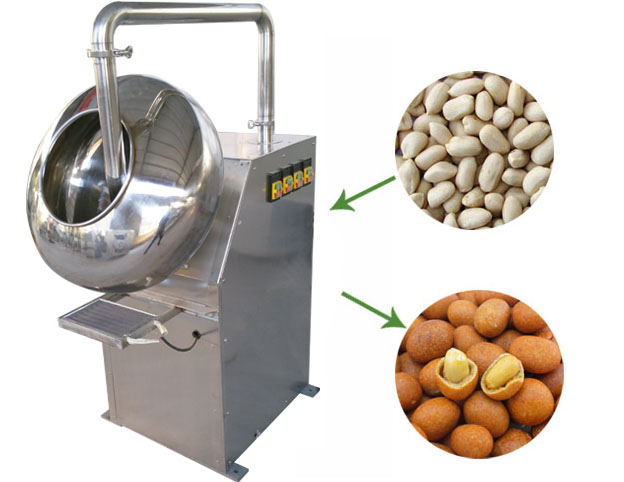
Secondly, optimize the speed of the machine. The drum speed of peanut coating machine plays an important role in the dispersion and mixing of materials. If the rotating speed is too slow, the materials are easy to accumulate and stick together; If the rotating speed is too fast, it may lead to material splashing or uneven coating. Therefore, according to the characteristics of materials and the requirements of coating process, choosing appropriate rotating speed is an important measure to avoid adhesion.
Thirdly, control the drying process. Drying is an important part in the coating process. Coating liquid should be dried in time after spraying, and then sprayed again. After the coating is finished, it should be dried immediately to prevent the damp materials from sticking together. It is recommended to set a suitable drying temperature and time based on production needs to ensure the material surface dries quickly without being damaged by overheating.
Additionally, choose appropriate auxiliary materials and additives. Some anti-sticking agents or powdery auxiliary materials (such as talcum powder, starch, etc.) can play an isolation role in the coating process and reduce the direct contact between peanuts. When choosing these excipients, we should pay attention to their food safety and compatibility with coating solution.
Finally, clean the equipment regularly and keep it clean. After the peanut coating machine is used for a long time, there may be residual coating liquid or other impurities attached to the surface of the equipment, which may become the cause of adhesion. Therefore, the operator should clean the equipment regularly to ensure that the inner wall of the drum and the spraying system are clean without residue.
Conclusion
These methods can effectively reduce the risk of material adhesion during the peanut coating process, thereby improving product quality and production efficiency. Preventing material adhesion in peanut coating machines requires the comprehensive application of process control, equipment optimization, and standardized operating procedures. By carefully managing spray parameters, drum speed, drying efficiency, and auxiliary materials, manufacturers can significantly improve product quality and production efficiency.
For industrial-scale production, investing in advanced, fully automatic peanut coating machines equipped with integrated drying systems and precision control mechanisms can further minimize adhesion issues and ensure consistent, high-quality coated peanut products.