
Peanut sheller machine is a kind of mechanical equipment commonly used in agricultural production, which is mainly used to remove the shells of peanuts for subsequent processing and use. However, when the peanut sheller needs to be stored for a long time, it is usually recommended to remove the belt. Why is this procedure so critical for the long-term health of both the belt and the peanut machine?
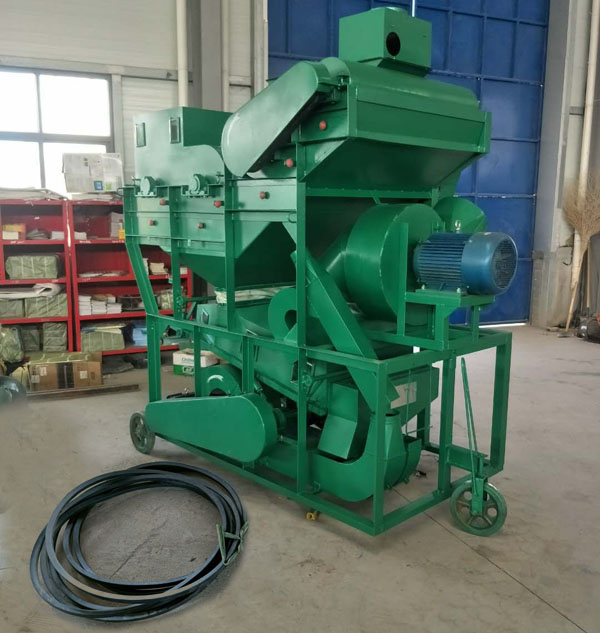
First of all, the belt is an important part of the transmission system of peanut sheller. When not used for a long time, if the belt is still tight on the machine, the elasticity and strength of the belt may decrease. Under long-term stress, the belt is prone to deformation and aging, which affects its service life and transmission efficiency.
Secondly, removing the belt can prevent damage caused by environmental factors. During storage, environmental factors such as temperature and humidity may adversely affect belt materials. For example, in a humid environment, the belt may absorb water, resulting in its material becoming fragile or moldy. In addition, the high temperature environment may accelerate the aging and hardening of the belt. Therefore, disassembling and properly storing the belt can effectively reduce the influence of these environmental factors on the belt.
Besides, removing the belt can also facilitate the overall cleaning and maintenance of the peanut sheller. Thorough cleaning and inspection of the machine before long-term storage can ensure that the machine is in good working condition when it is used again. After removing the belt, it is more convenient to clean up the residue and dust inside the machine, and to lubricate and maintain other parts as necessary.
Besides, removing the belt can also facilitate the overall cleaning and maintenance of the peanut sheller. Thorough cleaning and inspection of the machine before long-term storage can ensure that the machine is in good working condition when it is used again. After removing the belt, it is more convenient to clean up the residue and dust inside the machine, and to lubricate and maintain other parts as necessary.
To sum up, it is a very important step to remove the belt when the peanut shelling machine is stored for a long time. This can not only prolong the service life of belts and machines, but also ensure the safety and efficiency of equipment. Before storage, be sure to follow the instructions or professional advice to ensure that the equipment will remain in the best condition when used again. For operators who depend on their peanut machine season after season, this simple procedure is one of the most effective ways to protect their equipment investment and ensure a trouble-free restart when the next harvest arrives.
FAQ
Q1: Can I leave the belt on if my storage area is climate-controlled?
A: Even in a dry, temperature-stable environment, continuous tension will cause gradual elongation and loss of elasticity in the belt. Removal is still recommended to preserve belt tension and allow proper inspection of the pulleys.
Q2: How should I store the belt after removing it?
A: Clean it, then hang it on an indoor wall away from direct sunlight. Avoid coiling or folding it, as this can create permanent kinks that cause vibration during operation .
Q3: What else should I do to the peanut shelling machine before long-term storage?
A: Clean all residual kernels and dust from the interior, lubricate bearings with the manufacturer-recommended grease, and cover the machine to prevent dust accumulation .
Q4: How do I know if a stored belt is still usable?
A: Inspect for cracks, glazing, or soft spots. Bend the belt gently—if cracks appear on the outer surface, or if the belt feels stiff and inflexible, replace it before the next season.